
1. Location
The Byzantine Baths are located in the Upper Town (Ano Poli) of Thessaloniki, at the corner of Theotokopoulou & Krispou streets.
They are one of the most important surviving Byzantine monuments in the city.
2. Historical Background
Built around the late 12th to early 13th century.
They remained in continuous use for about 700 years, until 1940.
During the Byzantine era, they served as a public bathhouse for the neighborhood.
In the Ottoman period, they were known as Kule Hammam and operated as a “double bath” — with separate sections for men and women.
3. Architecture
The building follows the typical bathhouse structure, divided into three main rooms:
Frigidarium (cold room) – used as a changing area.
Tepidarium (warm room).
Caldarium (hot room) – with hypocaust underfloor heating.
Key architectural features:
Heating chambers and a water cistern.
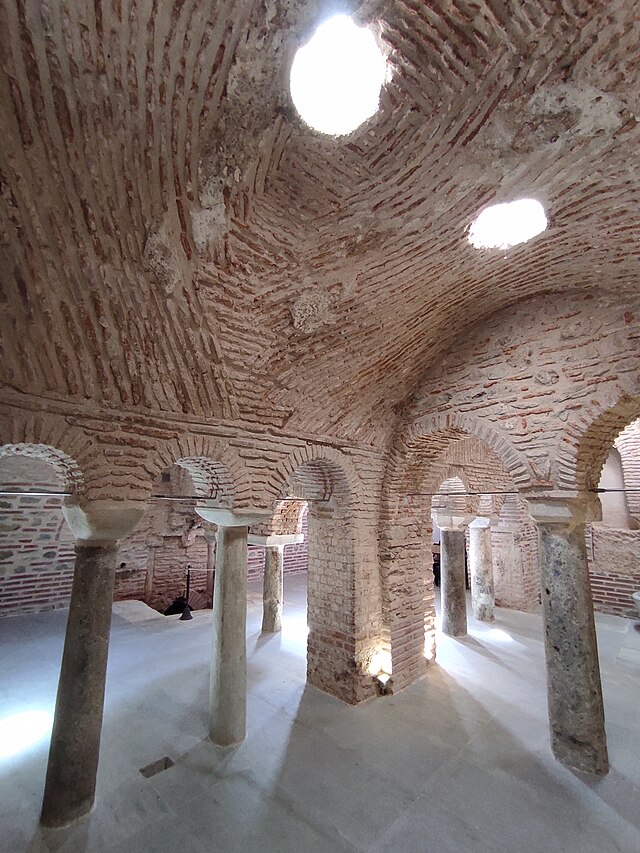
Domed ceilings (some octagonal, some hemispherical).
Original Byzantine and later Ottoman elements are still visible.
4. Restoration & Preservation
The baths are part of the UNESCO-listed Paleochristian and Byzantine Monuments of Thessaloniki.
After closing in 1940, the building suffered damage (including from the 1978 earthquake).
Extensive restoration was carried out by the Greek Archaeological Service.
Reopened to the public in 2015 as a cultural and historical monument.
5. Use Today
The baths NO LONGER operate as functional baths.
Today, they serve as a museum and cultural site, showcasing the daily life and architecture of the Byzantine and Ottoman eras.
Entrance is generally free for visitors.
6. Why Visit
One of the few surviving Byzantine bathhouses in Greece.
Unique combination of Byzantine engineering and Ottoman-era additions.
A peaceful, atmospheric monument that reveals a piece of everyday life in medieval Thessaloniki.



No responses yet