
The Escorial monastery was added to the UNESCO World Heritage List on November 2, 1984.
Location: near Madrid, in the municipality of San Lorenzo de El Escorial, Community of Madrid
It was founded by King Philip II in 1563 and completed around 1584. The complex includes a monastery, a royal palace, a basilica, a royal pantheon, a library, and other spaces.
Its significance: it represents one of the main monuments of the Spanish Renaissance, with great historical, artistic, and architectural importance.
Why is it a World Heritage Site?
UNESCO declared it a World Heritage Site because it is a masterpiece of human creative genius (cultural criterion) by combining architecture, religious, palatial, and monastic functions in a single site.
It has outstanding historical value as it reflects the power and ideology of Philip II and the Spanish Empire of the time.
Interesting Additional Facts
Its layout is inspired by the gridiron of Saint Lawrence’s martyrdom (hence the saying that the king bestowed this symbol upon it).
Its style is sober, almost austere, marking a shift from the more ornate style of certain earlier monuments.
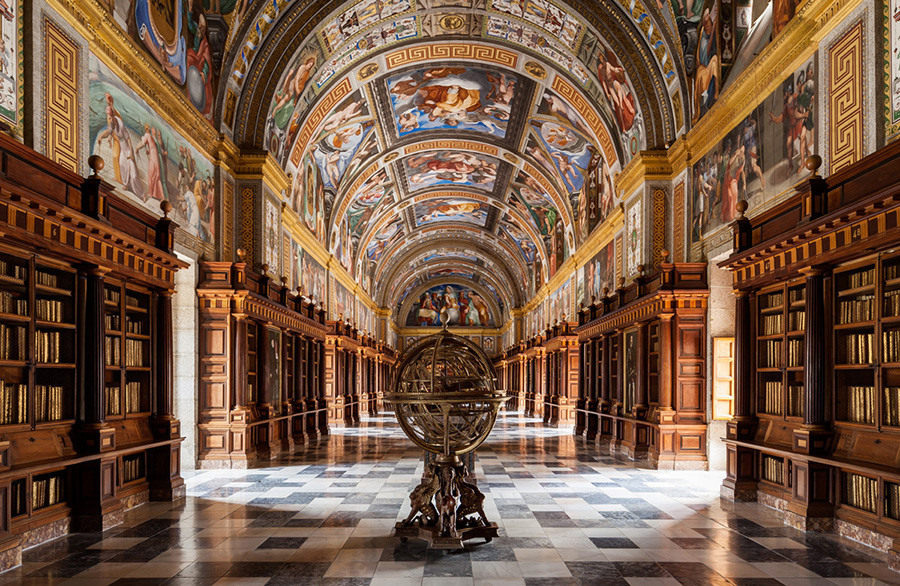
In addition to its religious and residential functions, it housed one of the most important libraries of its time.
The Monastery and Site of El Escorial is not only an extraordinary monument due to its size and complexity, but also because of the richness of its cultural significance. As a model for your work, it is a good example of a World Heritage Site in Spain where you can clearly see: the reason for its designation, its architecture and its history.



One response
[…] EL ESCORIAL MONASTERY, MADRID – SPAIN […]